Atlanta can change quickly from a straightforward route into a combination of traffic, road restrictions, weather and a clock that keeps moving.
The best time to make decisions is not when you are already inside the city. It is before you reach the Atlanta perimeter.
This guide brings together the essential checks every commercial driver should make before entering Metro Atlanta.
The quick answer
Before driving a semi through Atlanta:
- Confirm whether you should remain on I-285.
- Check current incidents and closures on 511GA.
- Review the driving time remaining on your clock.
- Check the local weather and visibility.
- Identify a legal place to stop before you need it.
- Know who to call if the truck breaks down.
Five minutes of planning can help prevent a wrong route, an unexpected delay or a last-minute search for parking.
1. Are you passing through or stopping inside Atlanta?
The reason for entering Atlanta determines which route you should consider.
Georgia restricts through-truck traffic inside the I-285 perimeter. Commercial trucks traveling on I-20, I-75 or I-85 generally need to take I-285 around the city when they do not have a permitted destination inside the perimeter.
Exceptions may apply when the driver is:
- Picking up or delivering freight inside I-285.
- Traveling to or from a carrier terminal inside the perimeter.
- Going to or from a repair facility.
- Traveling to or from a residence inside I-285.
The Georgia Department of Public Safety publishes the complete guidance for trucks using Atlanta’s multi-lane highways.
If your destination is inside the perimeter, keep the information supporting your pickup, delivery, terminal, repair or residence available.
Drivers can also review ATL’s detailed guide: Can Trucks Drive Inside I-285 in Atlanta?.
2. Check Atlanta traffic before choosing your route
There is no single route or time that will always be best for crossing Atlanta. A crash, lane closure, construction project or severe weather event can change conditions before you reach the next interchange.
511GA is Georgia’s official traffic and travel information service. It provides:
- Current traffic conditions.
- Crashes and roadway incidents.
- Construction activity.
- Planned and emergency closures.
- Travel times.
- Traffic cameras.
- Weather-related road information.
- Personalized route alerts.
The system provides information for Georgia interstates and state routes and offers access to more than 3,700 traffic cameras, according to 511GA.
Before entering Metro Atlanta, check the sections of your route that could affect your arrival:
- I-285.
- I-20 East or West.
- I-75 North or South.
- I-85 North or South.
- The Downtown Connector, when your destination permits entry.
- The final surface road leading to your destination.
Do not check traffic while driving. Review the route before moving or ask a dispatcher or passenger to check current conditions.
3. Protect the time remaining on your clock
A delay in Atlanta does not stop the driver’s hours-of-service clock.
For property-carrying drivers, the Federal Motor Carrier Safety Administration establishes:
- A maximum of 11 hours of driving after 10 consecutive hours off duty.
- No driving beyond the 14th consecutive hour after coming on duty.
- A 30-minute break after eight cumulative hours of driving without a qualifying interruption.
- A restart of the 7- or 8-day period after at least 34 consecutive hours off duty.
Current requirements are available from the Federal Motor Carrier Safety Administration.
Before reaching Atlanta, ask yourself:
- How much driving time do I have left?
- Could current congestion affect my arrival?
- Do I have enough time to reach the destination and leave?
- Where will I stop if the delivery takes longer than expected?
- Have I identified legal parking for my required rest?
Do not wait until your remaining time becomes an emergency. Plan the stop while you still have options.
This article provides general planning information and does not replace an ELD, company procedures or current FMCSA requirements.
4. Check more than the temperature
For a truck driver, weather is not simply a question of whether it will rain.
Conditions that can affect an Atlanta route include:
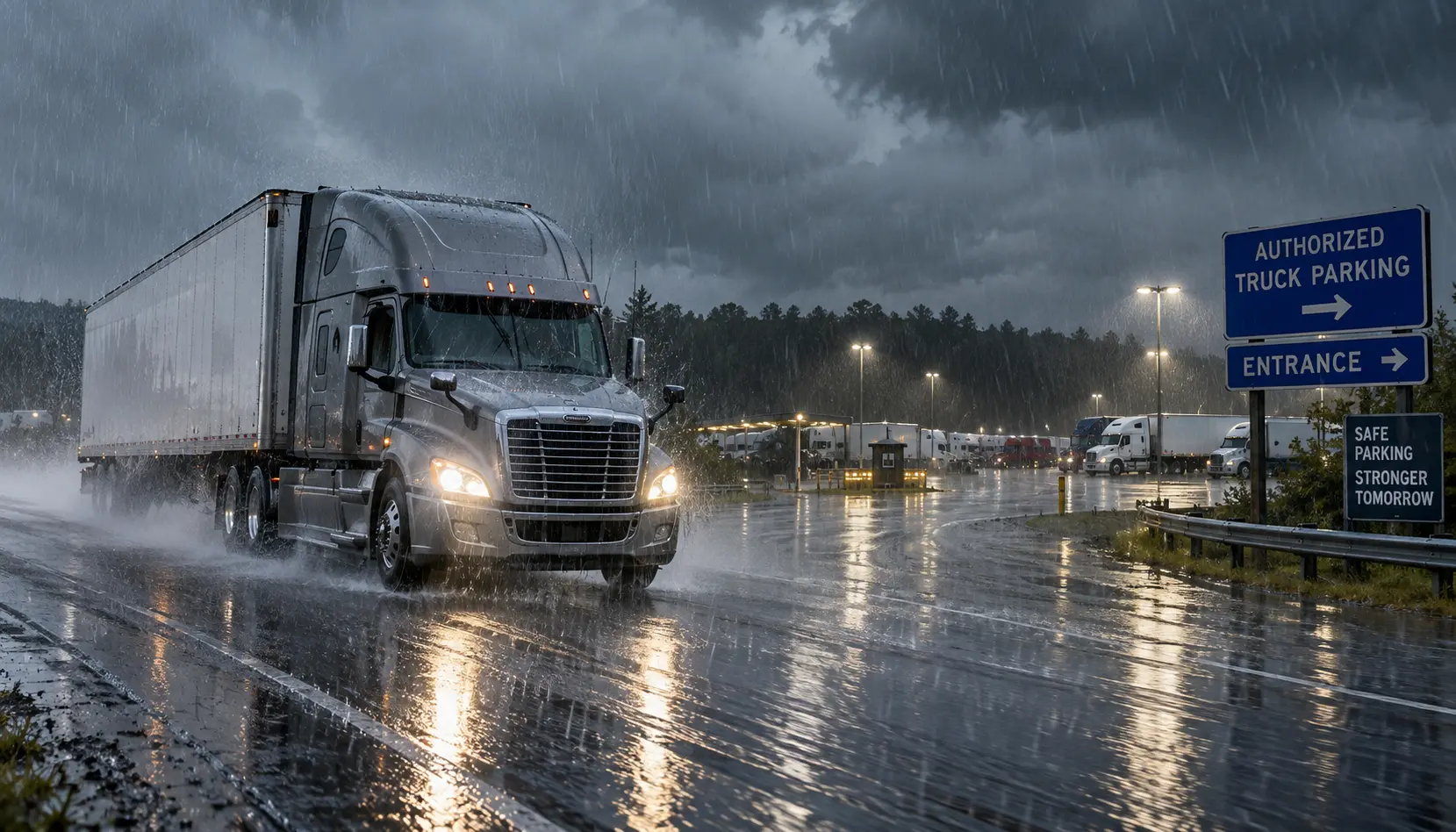
- Heavy rain and reduced visibility.
- Standing water or flash flooding.
- Strong winds, particularly for empty trailers.
- Severe thunderstorms.
- Extreme heat.
- Winter precipitation and icy roads.
The National Weather Service office for Atlanta and Peachtree City provides local warnings, hourly forecasts, radar, severe-weather outlooks and current hazard information.
Check the forecast for the time you expect to arrive, not only the current conditions. Your weather at the state line may be different from what you encounter several hours later in Metro Atlanta.
When severe weather is possible, leave additional time and identify where you can stop before conditions become unsafe.
5. Choose your stopping point before you need it
A shoulder, entrance ramp, vacant property or passenger parking lot should not become the plan simply because your clock is running out.
Before selecting a place to stop, confirm:
- Commercial trucks are permitted.
- The facility accepts your equipment type.
- The entrance can accommodate your vehicle.
- There is sufficient room to turn and back.
- The lot offers access during your arrival and departure times.
- A stand-alone trailer can remain without the tractor, when needed.
- The space is available before you leave your route.
- The location has the security features your operation requires.
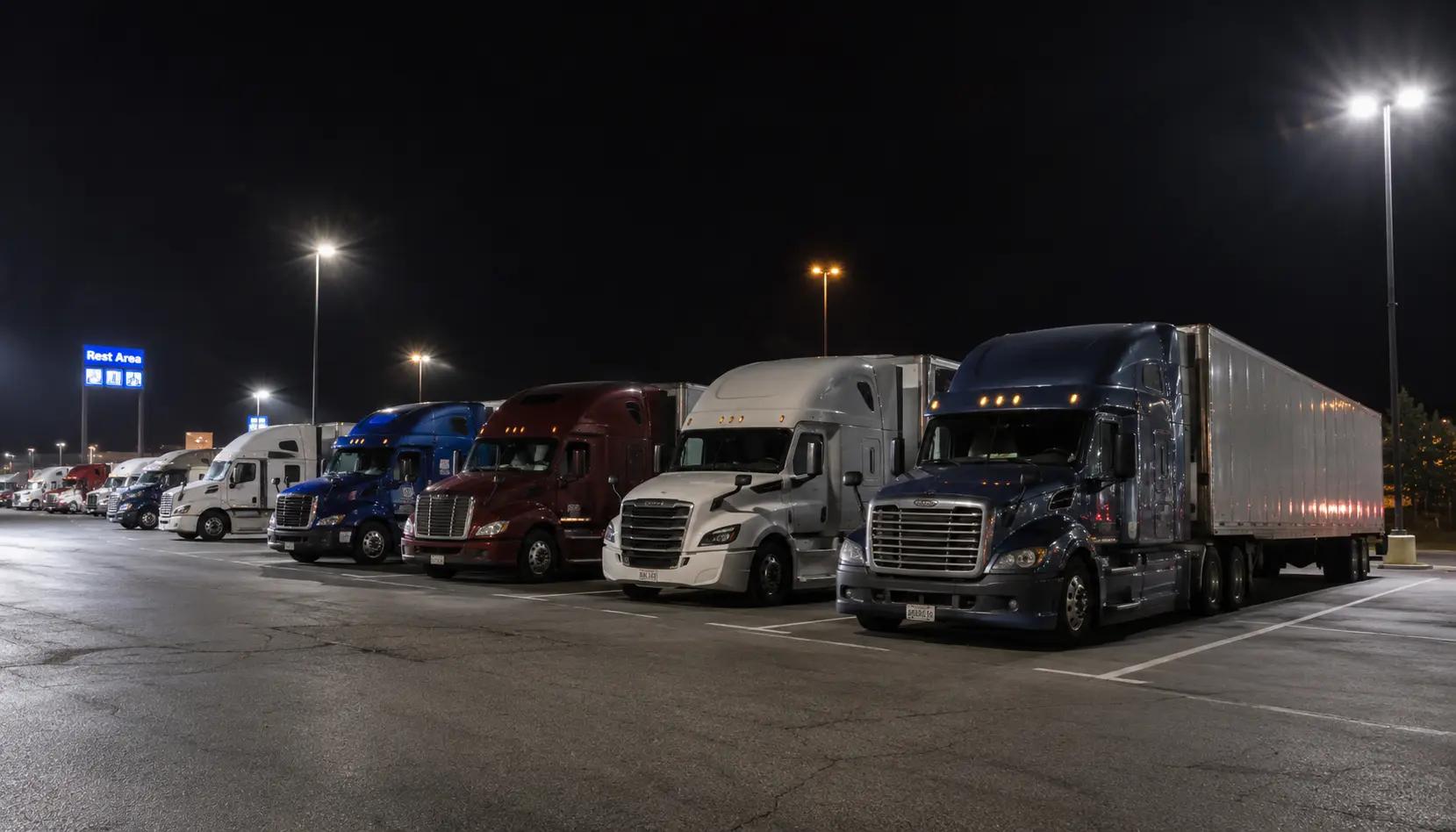
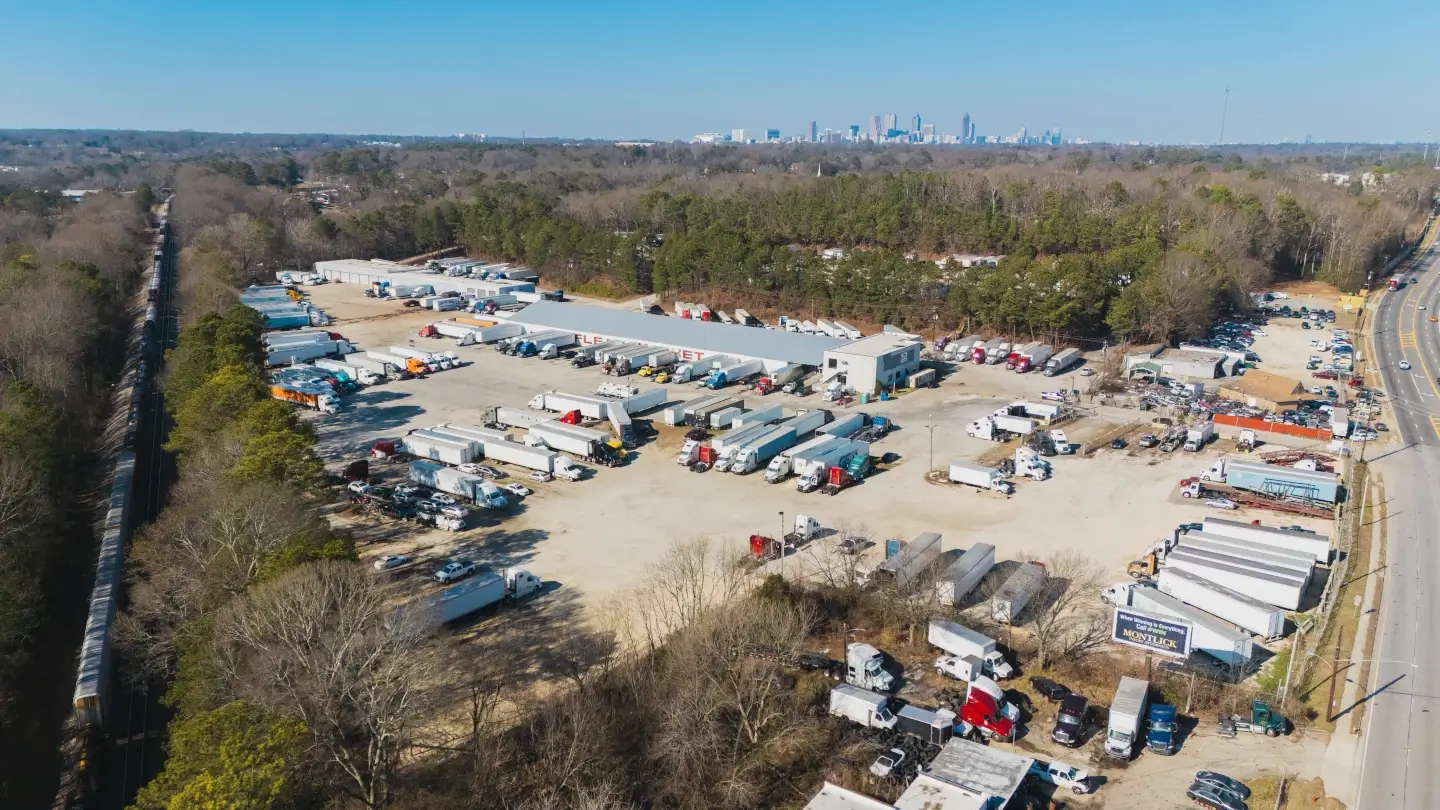
ATL Truck Parking accommodates:
- Bobtails.
- Stand-alone trailers.
- Tractor-trailer combinations.
- Box trucks.
- Commercial fleets.
The Atlanta facility offers a fenced perimeter, controlled access, lighting, camera monitoring and 24/7 access, according to ATL Truck Parking.
Availability can change. Confirm the appropriate space before driving to the facility.
6. Know what to do if the truck breaks down
If the vehicle develops a problem on an Atlanta interstate, first determine whether anyone is in immediate danger.
Call 911 when the situation involves:
- A collision.
- Fire or smoke.
- A medical emergency.
- A hazardous-material spill.
- A vehicle stopped in an active traffic lane.
- An immediate danger to other road users.
For a non-emergency breakdown on a Georgia interstate, drivers can dial 511 and speak with a live operator.
511GA can connect stranded motorists with:
- HERO in Metro Atlanta.
- CHAMP in other areas of Georgia.
These programs can assist with roadway incidents and disabled vehicles. Specialized truck repairs or heavy-duty towing may still require a commercial provider.
When requesting help, be ready to provide:
- Interstate or road name.
- Direction of travel.
- Nearest exit or mile marker.
- Whether the vehicle is blocking a lane.
- Truck and trailer type.
- Visible warning lights or symptoms.
- Whether the trailer is loaded.
- Whether you need roadside repair, towing or parking.
ATL also provides commercial truck and trailer repair services. Read the complete guide: Truck Breakdown in Atlanta: What Should You Do?.
Your 10-minute Atlanta arrival check
Use this checklist before reaching the perimeter:
| Check | Question to answer |
|---|---|
| Destination | Am I passing through or stopping inside I-285? |
| Route | Are there crashes, closures or major delays? |
| Documentation | Do I have proof of my pickup, delivery or permitted destination? |
| Driving time | How much legal driving time remains? |
| Weather | What conditions are expected when I arrive? |
| Equipment | Am I driving a bobtail, trailer or full combination? |
| Parking | Do I have a confirmed legal place to stop? |
| Repair | Who will I call if the truck develops a problem? |
| Emergency | Do I know when to call 911 or 511? |
Save this checklist or send it to the driver before dispatch.
One decision before Atlanta can prevent several problems later
A driver should not have to circle Atlanta while watching the clock, checking unfamiliar exits and hoping the next location permits truck parking.
The better approach is simple:
- Confirm the route.
- Review current conditions.
- Protect the available driving time.
- Identify where you will stop.
- Keep the correct assistance numbers available.
ATL helps drivers plan their stop, park their equipment and access truck repair services from one location in Atlanta.
Arriving in Atlanta today? Call 470-725-8283 to check parking availability before leaving your route.
For commercial truck repair, call 470-725-8283.
Plan your stop. Protect your clock. Keep moving.
Frequently asked questions
Can semi-trucks drive through downtown Atlanta?
Through-truck traffic generally needs to use I-285 around Atlanta. Exceptions may apply for pickups, deliveries, terminals, repairs and residences inside the perimeter. Review current Georgia Department of Public Safety guidance before traveling.
Where can I check current truck traffic in Atlanta?
511GA provides current traffic conditions, incidents, closures, construction information, travel times and traffic cameras for Georgia interstates and state routes.
Can 511GA help when a truck breaks down?
Drivers experiencing a non-emergency breakdown on a Georgia interstate can dial 511 and request assistance from a live operator. Call 911 when there is an emergency or immediate danger.
What should I check before choosing truck parking?
Confirm that commercial vehicles are permitted, the space fits your equipment, the entrance is accessible, the facility is open when you need it and availability has been verified.
Can I leave a stand-alone trailer at ATL?
ATL accommodates stand-alone trailers, bobtails and tractor-trailer combinations. Call before arrival to confirm that the correct type of space is available.
Does ATL provide truck repair?
Yes. ATL provides commercial truck and trailer repair services in addition to parking. Service availability should be confirmed directly with the repair team.