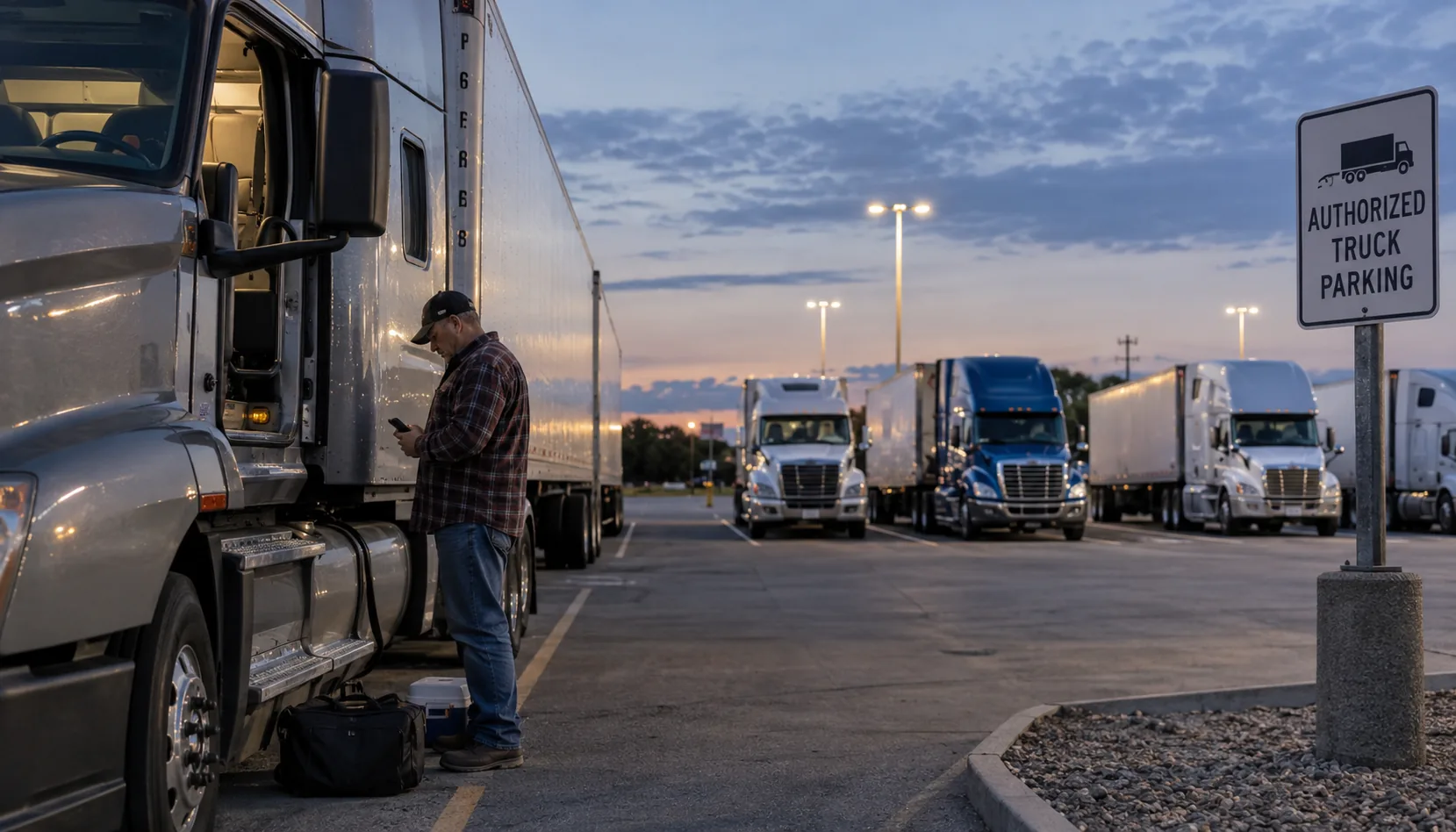
You have finished the delivery, found somewhere to park and switched your status to off duty. A few minutes later, you realize the truck needs to be moved. Then dispatch calls with a question about the next load.
Small interruptions can change how a break must be recorded. That matters when you are counting on those 10 hours to begin your next driving period.
For most property-carrying commercial drivers, a standard 10-hour break means 10 consecutive hours off duty before driving again. After completing that period, a driver may drive for up to 11 hours within the applicable 14-hour window.
The short answer
A property-carrying driver subject to federal hours-of-service rules may drive a maximum of 11 hours after completing 10 consecutive hours off duty.
The 10-hour period:
- Must be consecutive unless the driver uses a qualifying sleeper-berth split.
- Is different from the required 30-minute driving break.
- Does not automatically restart the weekly 60/70-hour limit.
- Must be recorded correctly in the driver’s log or ELD.
- Should begin after the driver has reached an authorized location where the truck can remain for the full break.
The current federal limits are summarized by the Federal Motor Carrier Safety Administration.
Does the driver have to sleep for all 10 hours?
No. The federal rule addresses duty status, not the number of hours a driver must be asleep.
A driver may use the off-duty period to sleep, eat, shower or handle personal activities. However, work performed for the carrier may need to be recorded as on-duty time.
That distinction is important. A driver should not assume that every minute spent parked automatically counts toward the required break.
Complete required work, check-in procedures and other on-duty responsibilities before beginning the 10-hour period. When in doubt, follow the carrier’s logging procedures and current FMCSA requirements.
What is the difference between the common HOS breaks?
The 30-minute break, 10-hour break and 34-hour restart solve different problems.
| Rest period | General purpose | Basic federal requirement for property-carrying drivers |
|---|---|---|
| 30-minute break | Interrupts accumulated driving time | Required after eight cumulative hours of driving without a qualifying 30-minute interruption |
| 10-hour break | Allows a new daily driving period | Ten consecutive hours off duty before driving again |
| 34-hour restart | Restarts the 60/70-hour calculation | At least 34 consecutive hours off duty |
Completing a 10-hour break does not erase the hours accumulated toward the weekly 60/70-hour limit. That generally requires a qualifying