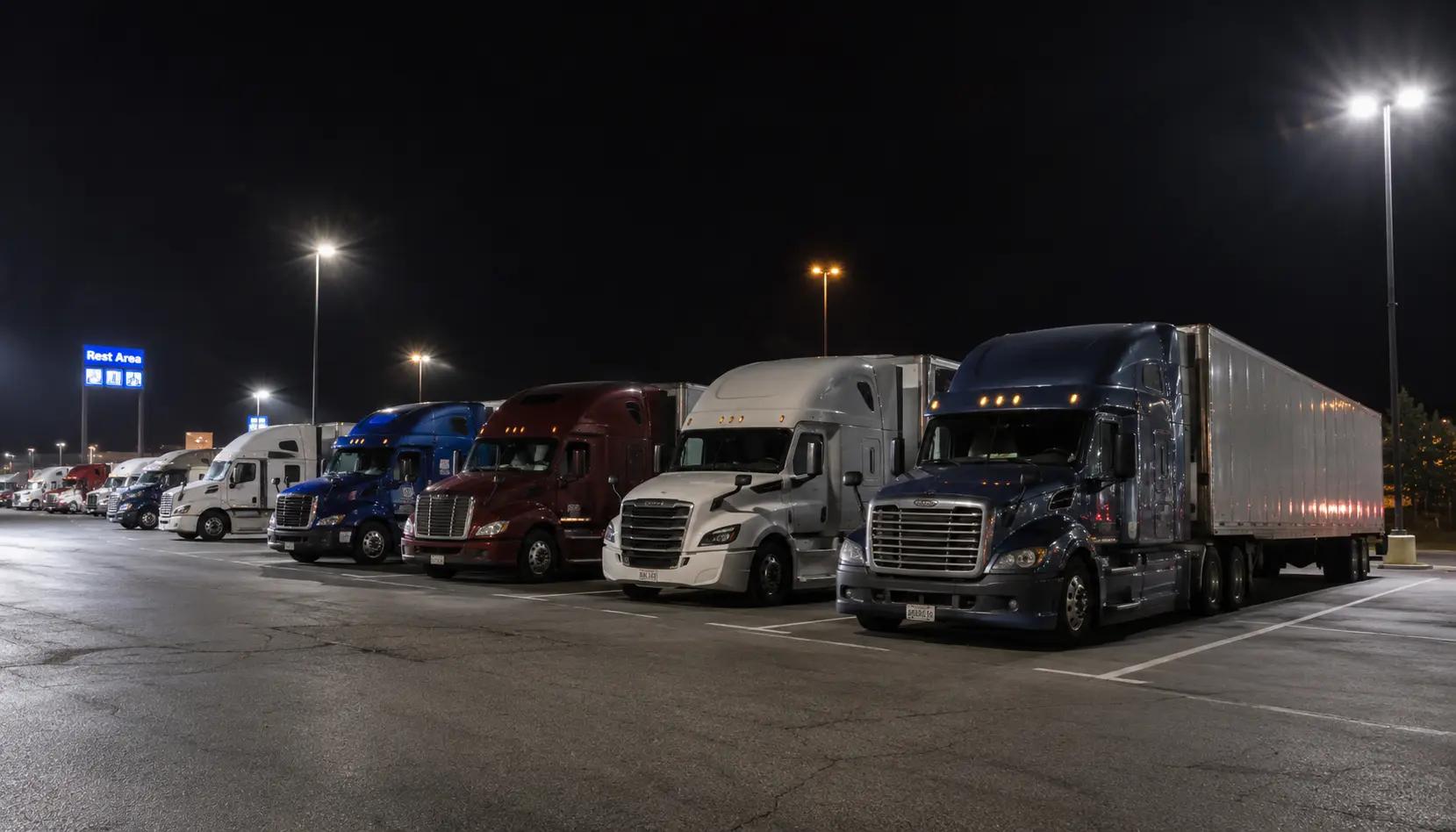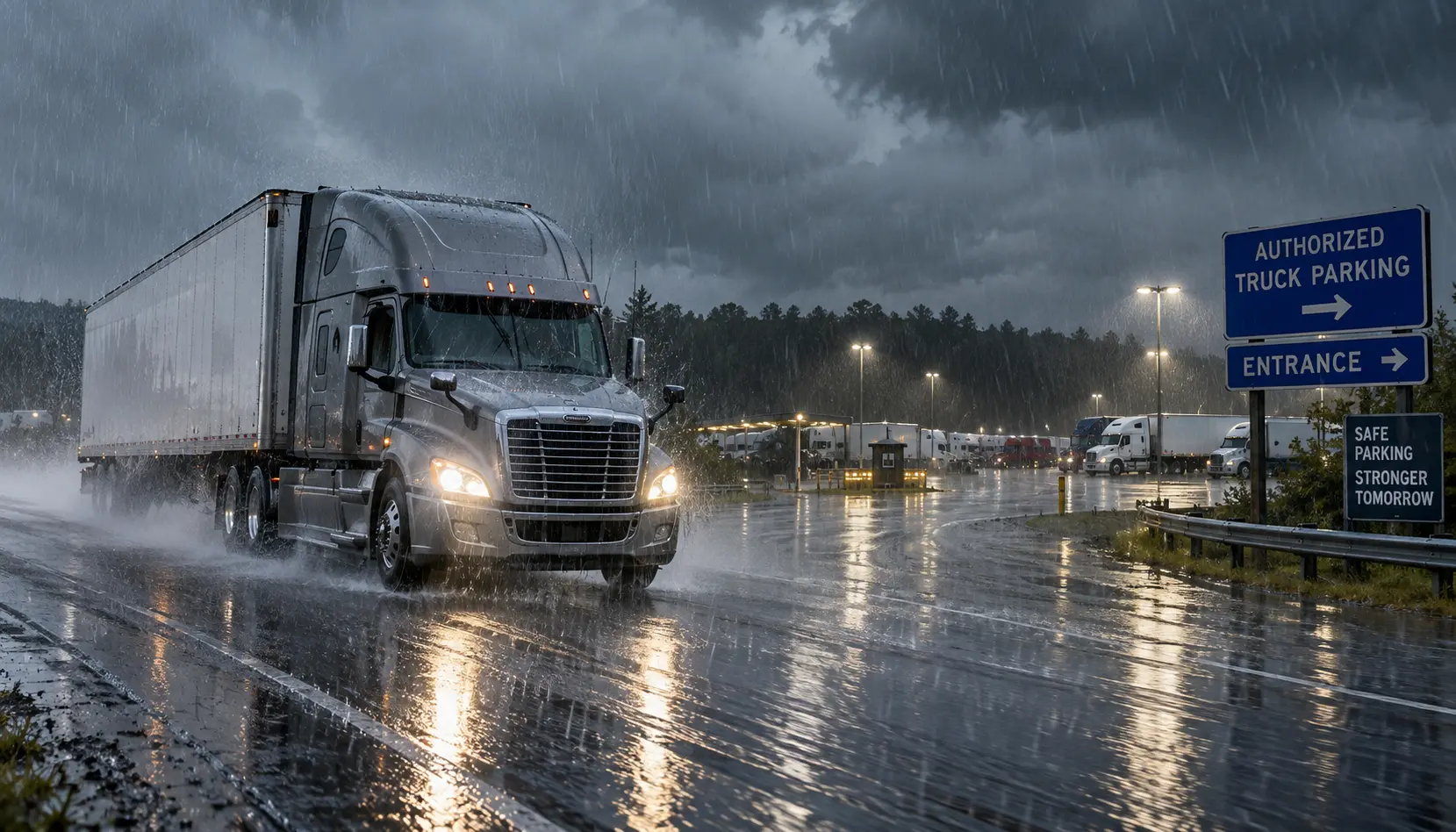
You pull into the first truck stop and every space is taken. You try another location a few miles down the road. Same problem.
Now your driving clock is getting shorter, you still need a legal place to stop, and every additional mile creates more pressure.
If the truck stops around you are full, do not spend the rest of your available driving time circling parking lots. Check your clock, contact dispatch, identify authorized alternatives and call the next location before changing your route.
Here is a practical way to handle the situation.
You are not the only driver facing this problem
Truck parking shortages affect drivers across the United States.
In the 2019 Jason’s Law survey, the Federal Highway Administration received responses from 11,696 truck drivers. Ninety-eight percent reported having problems finding safe parking.
Drivers said shortages occurred most frequently:
- From the afternoon through 5 a.m.
- Monday through Thursday.
- Along major freight corridors and around metropolitan areas.
The survey also found that unauthorized parking occurred most frequently between 7 p.m. and 9 a.m., particularly on highway ramps and shoulders.
Source: Federal Highway Administration — Jason’s Law Commercial Motor Vehicle Parking Survey.
The lesson is simple: parking should be part of the route plan, especially when your day will end near a busy freight corridor.
First, check your remaining driving time
Before searching for another parking location, look at both clocks that matter:
- Your remaining driving time.
- The time left in your 14-hour driving window.
Federal hours-of-service rules generally allow property-carrying drivers to drive for up to 11 hours after 10 consecutive hours off duty. A driver may not drive beyond the 14th consecutive hour after coming on duty following that rest period.
Searching for parking while driving still uses your available time. The parking shortage does not pause the clock.
Review the complete requirements through the Federal Motor Carrier Safety Administration and follow your ELD and carrier procedures.
Do not wait until your final legal minutes to make a new plan.
Stop searching randomly
When the first location is full, it is tempting to open a map and drive toward whichever parking symbol appears next.
That can lead to another full lot, an entrance that cannot accommodate your trailer or a property where commercial parking is prohibited.
Before moving, identify two realistic options:
- The closest authorized location that can accommodate your equipment.
- A backup along the same route or freight corridor.
Searching along your planned route is usually more practical than making an unverified detour into a residential or congested area.
Check these parking options
Not every large parking lot is a legal truck parking location. Consider the following options, but confirm the rules before arriving.
| Possible location | What to verify |
|---|---|
| Commercial truck parking facility | Vehicle types accepted, access hours and current availability |
| Truck stop or travel center | Available spaces, reservation options and trailer restrictions |
| Public rest area | Posted time limits, closures and commercial vehicle rules |
| Shipper or receiver | Whether staging or overnight parking is expressly permitted |
| Carrier terminal | Access requirements and available space |
| Repair facility | Whether parking is allowed while waiting for service |
| Private commercial property | Written or direct permission from the owner or operator |
Never assume that an empty retail lot, industrial property or roadside area allows overnight truck parking.
Call before leaving your route
A short phone call can prevent an unnecessary detour.
When contacting a parking facility, ask:
- Do you have space available right now?
- Can you accommodate a bobtail, trailer or complete tractor-trailer?
- Are loaded trailers accepted?
- Can I arrive after regular business hours?
- Is the entrance accessible from my direction of travel?
- Do I need to reserve the space?
- Are there gate or check-in instructions?
- Can I leave and return during my stay?
Tell the facility what you are driving. A space suitable for a bobtail may not work for a tractor with a 53-foot trailer.
Do not treat online availability as a guarantee unless the facility confirms the space.
Tell dispatch before the situation becomes urgent
Parking problems can affect delivery appointments, available hours and the following day’s route. Let dispatch or your operations team know what is happening early.
Share:
- Your current location.
- The time remaining on your clock.
- The parking locations you already checked.
- The next authorized option.
- The estimated detour or delay.
- Any changes that could affect the delivery.
Early communication gives everyone more time to make a reasonable decision. It also creates a record of the steps you took to find legal parking.
Avoid the “good enough” parking decision
A wide shoulder or empty lot may look acceptable late at night. That does not mean parking is authorized or safe.
The Federal Highway Administration identifies inadequate truck parking as a national safety concern because it can cause tired drivers to continue driving or stop in unofficial locations such as shoulders, exit ramps and vacant lots.
Before parking, check:
- Posted signs.
- Property rules.
- Local restrictions.
- Whether your truck blocks traffic or visibility.
- Whether emergency vehicles can pass.
- Whether you have permission from the property owner.
- Whether the ground and entrance are suitable for heavy equipment.
If you are unsure, contact the property operator or the appropriate transportation authority.
What if you are already stopped in an unsafe location?
If the truck is disabled or you cannot continue safely, protecting people comes first.
Call 911 when there is a collision, fire, medical emergency, hazardous-material incident or immediate danger. On highways with a state traveler-assistance service, contact the appropriate road authority for non-emergency support.
Use your hazard lights and required warning devices according to federal regulations, current road conditions and your company’s procedures. Do not walk into an active traffic lane or attempt a roadside repair that exposes you to moving vehicles.
Once the immediate situation is controlled, arrange the appropriate roadside repair, towing or authorized parking.
Make tomorrow’s parking easier
After finding a space, take a few minutes to improve the next day’s plan.
Save:
- A primary parking location.
- Two backup locations.
- Their phone numbers.
- Vehicle restrictions.
- Access hours.
- Arrival instructions.
- Nearby repair options.
If the same corridor is repeatedly full, begin checking parking earlier on future trips. The goal is not to predict every delay. It is to leave yourself enough room to respond when the first plan fails.
If your route brings you through Atlanta
Drivers traveling through Georgia can contact ATL Truck Parking for spaces accommodating:
- Bobtails.
- Stand-alone trailers.
- Tractor-trailer combinations.
- Daily parking.
- Extended and monthly parking.
The facility offers 24/7 access, camera monitoring and commercial truck repair services at the same location.
Call 470-725-8283 before leaving your route to check current parking availability and receive arrival instructions.
View daily truck parking information.
Plan your stop. Protect your clock. Keep moving.
Frequently asked questions
What should I do when every nearby truck stop is full?
Check your remaining driving time, contact dispatch and look for an authorized commercial parking facility along your route. Call before driving to the next location and keep at least one backup option.
Can I park on a highway shoulder or entrance ramp?
Highway shoulders and ramps should not be treated as routine parking. Rules and enforcement vary, and these locations can create serious safety risks. Follow posted signs and directions from law enforcement or transportation authorities.
Can I park at a store or shopping center?
Only when commercial truck parking is permitted and you have the appropriate authorization. A large or empty lot does not automatically mean truck parking is allowed.
Does my driving clock stop while I search for parking?
Time spent driving in search of parking counts as driving time. Off-duty periods also generally do not extend the 14-consecutive-hour driving window. Always follow your ELD and the current FMCSA rules that apply to your operation.
How early should I begin looking for truck parking?
There is no single time that works for every route. Begin before parking becomes urgent, especially when traveling at night, during the week or near a major freight corridor. The FHWA survey found that parking shortages were reported most frequently from the afternoon through 5 a.m.
Should I trust parking availability shown in an app?
Apps can help identify possible locations, but availability can change before you arrive. Call the facility when possible, particularly if reaching it requires a significant detour.
This article provides general planning information. Parking rules, facility policies, road restrictions and hours-of-service requirements may change or vary by location and type of operation. Follow current road signs, your ELD, carrier procedures and instructions from the appropriate authorities.