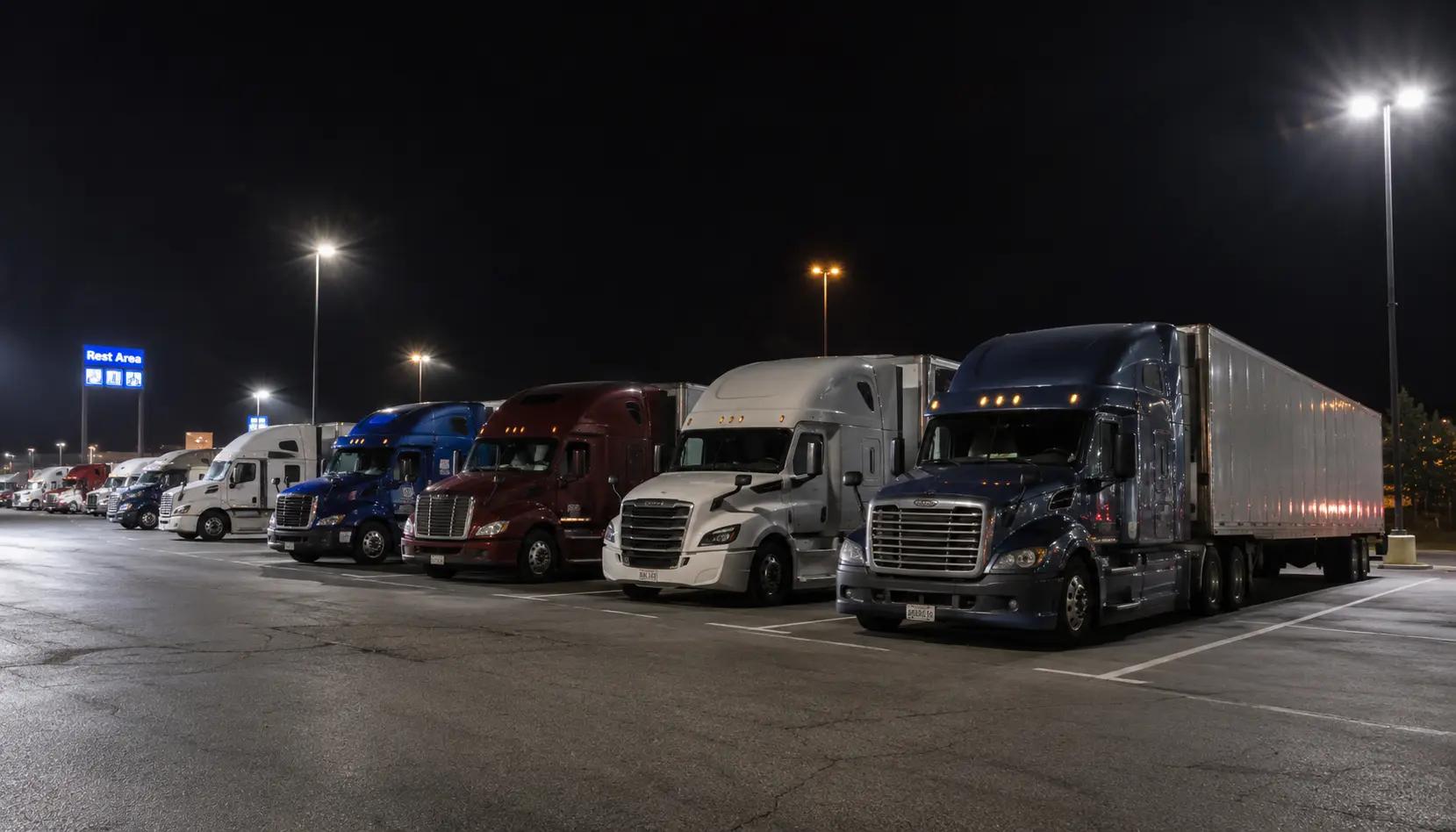
A pickup is delayed, the tractor needs service or the next load is not ready. Whatever the reason, you need a place to leave the trailer while the tractor keeps moving.
Yes, you can park a trailer without the tractor in Atlanta, but only at a facility that expressly accepts stand-alone trailers. Before unhooking, confirm the parking rules, cargo restrictions, access conditions and any requirements from your carrier, customer or insurance provider.
Finding an open space is only the first part of the decision.
What is trailer drop parking?
Trailer drop parking is a designated space where a driver can leave a trailer without keeping the tractor attached.
Drivers and fleets commonly use it when:
- A trailer must wait between loads.
- A customer cannot receive the shipment immediately.
- The tractor needs repair or maintenance.
- A driver needs to switch equipment.
- A fleet needs additional space outside its terminal.
- An empty trailer is waiting for its next assignment.
A regular truck stop, retail parking lot or vacant property may not allow an unattended trailer. Always obtain permission from the property or facility before disconnecting.
Can you leave a loaded trailer?
Some parking facilities accept loaded trailers, while others only allow empty equipment. The cargo itself may also be subject to carrier, shipper, lease or insurance requirements.
Before arriving, tell the facility:
- Whether the trailer is loaded or empty.
- What type of trailer you are bringing.
- How long you expect it to remain.
- Whether the cargo has special handling requirements.
- Who is authorized to retrieve it.
- Whether you need access outside regular office hours.
Do not describe a loaded trailer simply as “a trailer.” That missing detail can create problems when you arrive.
Loaded and empty trailers require different checks
| Situation | What to confirm |
|---|---|
| Empty trailer | Equipment type, length, condition and retrieval date |
| Loaded dry van | Cargo restrictions, door lock or seal and authorized pickup |
| Reefer trailer | Temperature monitoring, fuel level and facility rules |
| Flatbed | Load securement, coverings and weather exposure |
| Hazmat load | Facility permission and all applicable carrier and regulatory requirements |
| Damaged trailer | Whether it can be moved safely or needs repair before parking |
A parking facility’s acceptance does not replace the operating rules established by the carrier, cargo owner or insurer.
Document the trailer before leaving
Take a few minutes to record the condition of the equipment. The goal is to create a clear reference showing what was left, where it was parked and how it was secured.
Photograph:
- The front, rear and both sides.
- Trailer number and license plate.
- Doors, hinges and locking equipment.
- Seal number, when applicable.
- Tires and visible wheel condition.
- Lights and reflective tape.
- Landing gear.
- Any existing damage.
Save the parking confirmation, arrival time and assigned space with the photos. If another driver will retrieve the trailer, share the same information with that person.
This record helps the fleet, driver and parking facility identify the correct equipment and compare its condition at pickup.
Check the surface before disconnecting
A trailer should be left in a space designed to support commercial equipment.
Before lowering the landing gear, look at:
- Whether the surface is firm and reasonably level.
- Whether the trailer fits completely inside the assigned space.
- Clearance from neighboring equipment.
- Space for the next driver to reconnect.
- Overhead obstacles.
- Drainage or standing water.
- The facility’s rules for brakes, chocks and landing gear.
Follow the equipment manufacturer’s instructions and your company’s procedures when disconnecting. Do not leave a trailer where it blocks an aisle, entrance, emergency access point or another vehicle.
Control who can retrieve the trailer
Trailer access should be decided before anyone arrives at the gate.
Provide the facility with the information it requires, which may include:
- Driver’s full name.
- Company name.
- Tractor number.
- Trailer number.
- Vehicle plate.
- Expected pickup date.
- Contact information.
- Written authorization when someone other than the original driver will retrieve it.
If the pickup driver changes, update the authorization rather than relying on a forwarded text message or verbal explanation at the entrance.
A controlled process reduces confusion and helps prevent the wrong trailer from leaving with the wrong tractor.
What security features should you look for?
No parking facility can promise that an incident will never occur. Drivers can still reduce exposure by checking how the property manages vehicles and access.
Look for:
- A fenced perimeter.
- Controlled entry and exit.
- Camera monitoring.
- Lighting around parking and access areas.
- Spaces intended for commercial trailers.
- Clear procedures for authorized drivers.
- A process for reporting suspicious activity or damage.
- Enough room to connect and inspect the equipment before departure.
Ask how access works instead of assuming that “24/7 parking” means anyone can enter the lot at any time.
Inspect everything again before moving
Do not connect and immediately pull onto the road. Walk around the trailer first.
Check:
- Trailer and license numbers.
- Door lock and seal.
- Tires, wheels and visible damage.
- Landing gear position.
- Air and electrical connections.
- Fifth-wheel coupling.
- Lights and reflectors.
- Brakes.
- Cargo securement, when accessible and required.
- Clearance around the vehicle.
FMCSA rules require cargo transported in interstate commerce to be immobilized or secured so it does not shift within or fall from the commercial vehicle. Securement components must also be in proper working order. Review the applicable requirements in the FMCSA Cargo Securement Rules.
The pickup inspection matters even when the trailer has not moved. Another vehicle may have parked beside it, weather conditions may have changed or damage may have occurred while it was unattended.
Trailer-only parking at ATL
ATL Truck Parking accepts stand-alone trailers in addition to bobtails and tractor-trailer combinations.
Published trailer spaces measure approximately 12 by 53 feet. The Atlanta facility also provides:
- Controlled access.
- A fenced perimeter.
- Lighting.
- Camera monitoring.
- 24/7 access.
- Commercial truck and trailer repair services.
Facility information can be reviewed on the ATL Truck Parking website.
Availability and acceptance requirements may change according to the trailer, cargo and length of stay. Call before arriving and explain exactly what you need to leave.
For trailer parking, call 470-725-8283.
What to say when you call
A clear request saves time:
“I need to leave a 53-foot trailer without the tractor. The trailer is [loaded/empty], and I expect to retrieve it on [day/time]. Do you have an appropriate space available, and what information do you need before I arrive?”
This gives the parking team enough context to confirm whether the facility can accommodate the equipment.
Trailer drop checklist
Before leaving:
- Confirm the facility accepts stand-alone trailers.
- Explain whether the trailer is loaded or empty.
- Check carrier, customer and insurance requirements.
- Confirm the assigned space.
- Photograph the equipment and existing damage.
- Record the trailer, plate and seal numbers.
- Follow the correct disconnecting procedure.
- Identify who may retrieve the trailer.
- Save the parking confirmation and contact information.
Before pickup:
- Confirm driver authorization.
- Match the trailer and seal numbers.
- Inspect the equipment.
- Connect air and electrical lines correctly.
- Check the coupling, brakes, tires and lights.
- Review cargo securement requirements.
- Complete the company’s required pre-trip inspection.
Frequently asked questions
Can I park only a trailer at ATL Truck Parking?
Yes. ATL accepts stand-alone trailers, subject to space availability and facility requirements. Call before arriving and state whether the trailer is loaded or empty.
Can someone else pick up my trailer?
The facility may require authorization and identification for the pickup driver. Confirm the process before leaving the trailer and update the information if the assigned driver changes.
Can I leave a loaded trailer overnight?
It depends on the facility, type of cargo and requirements established by the carrier, customer or insurer. Describe the load before arriving and confirm that loaded trailers are permitted.
What size are ATL’s trailer spaces?
ATL publishes stand-alone trailer spaces measuring approximately 12 by 53 feet. Confirm that the available space is suitable for your specific equipment.
Can ATL repair the trailer while it is parked?
ATL provides commercial truck and trailer repair services. Contact the repair team separately to explain the problem and confirm technician availability.
Should I inspect an unattended trailer before moving it?
Yes. Check its condition, identification, doors, seal, tires, landing gear, connections, coupling, brakes, lights and cargo securement before returning to the road.